


Stocks, slings, boots and gear brought back by the people who own them
Their photos, their words. Nothing stripped, nothing sanded, the dings still where they were.
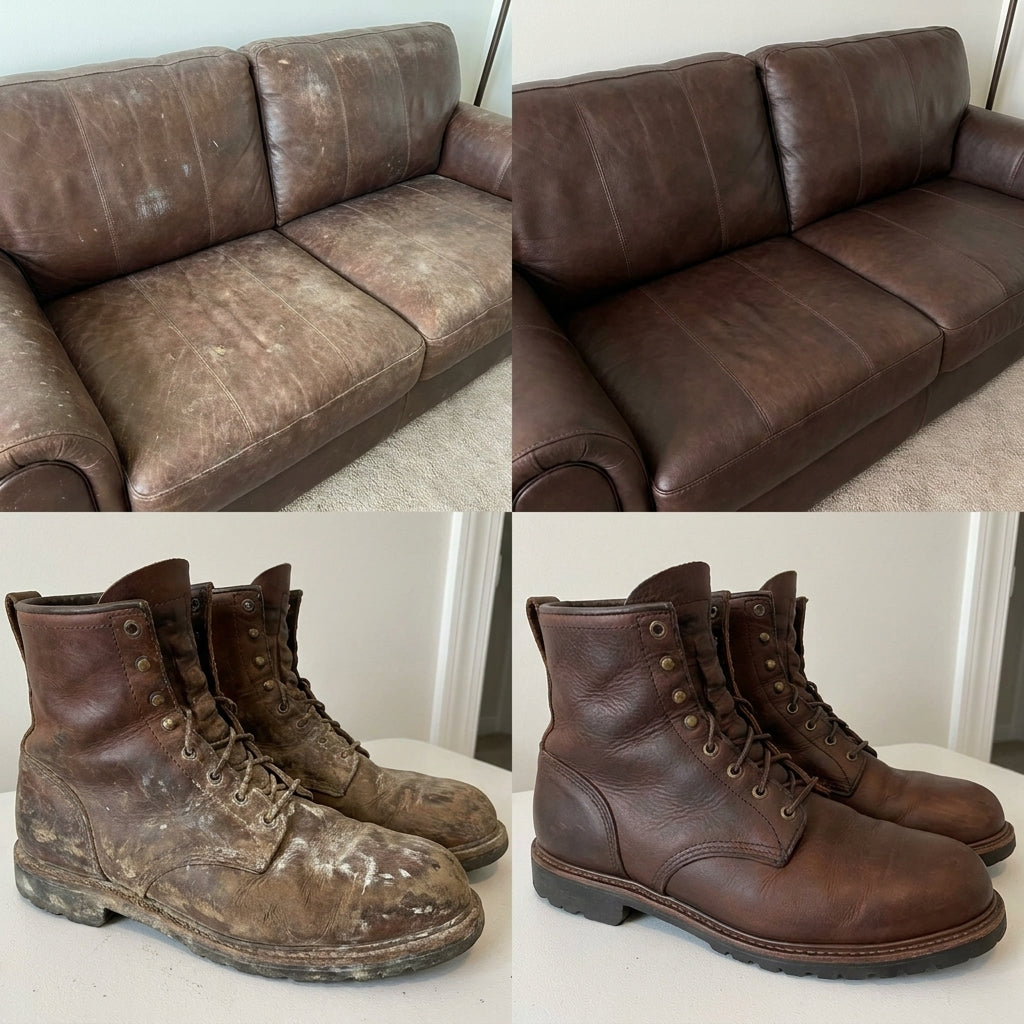
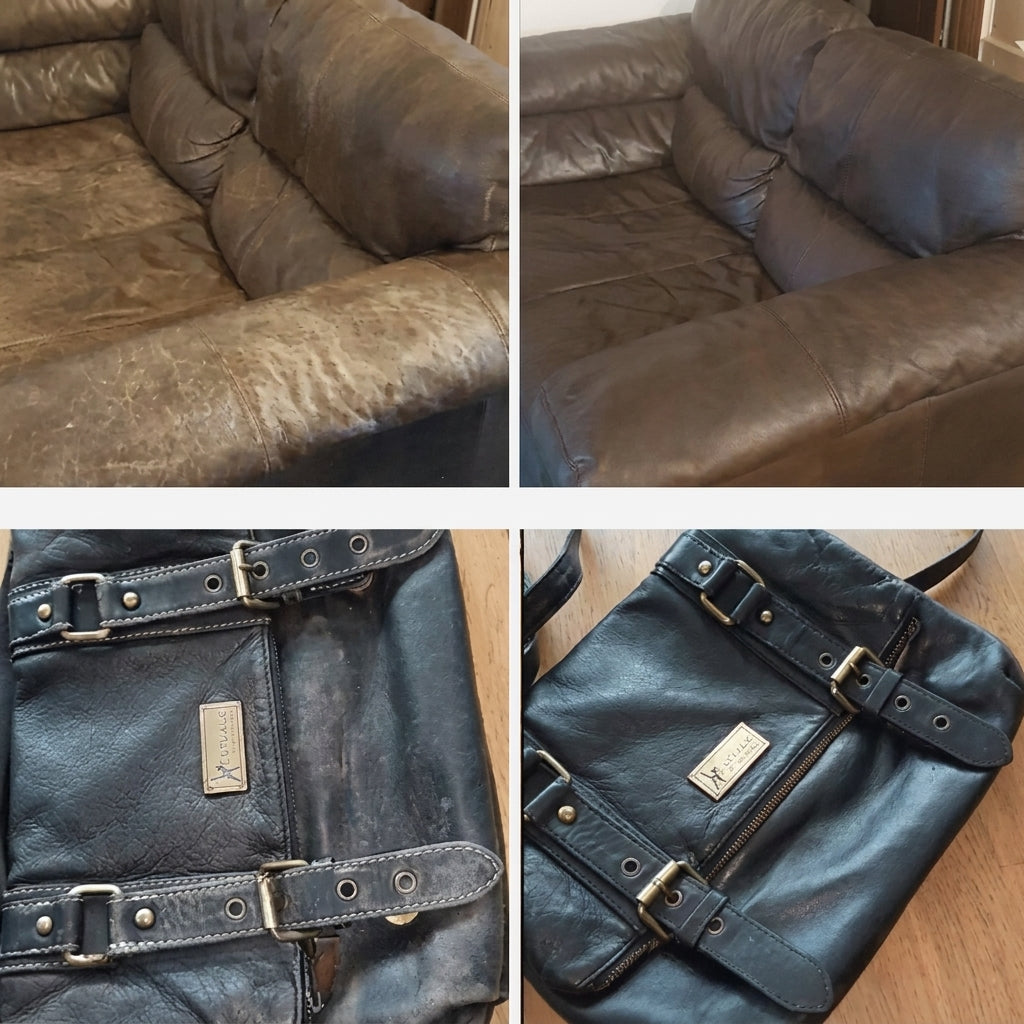
 Before
 After
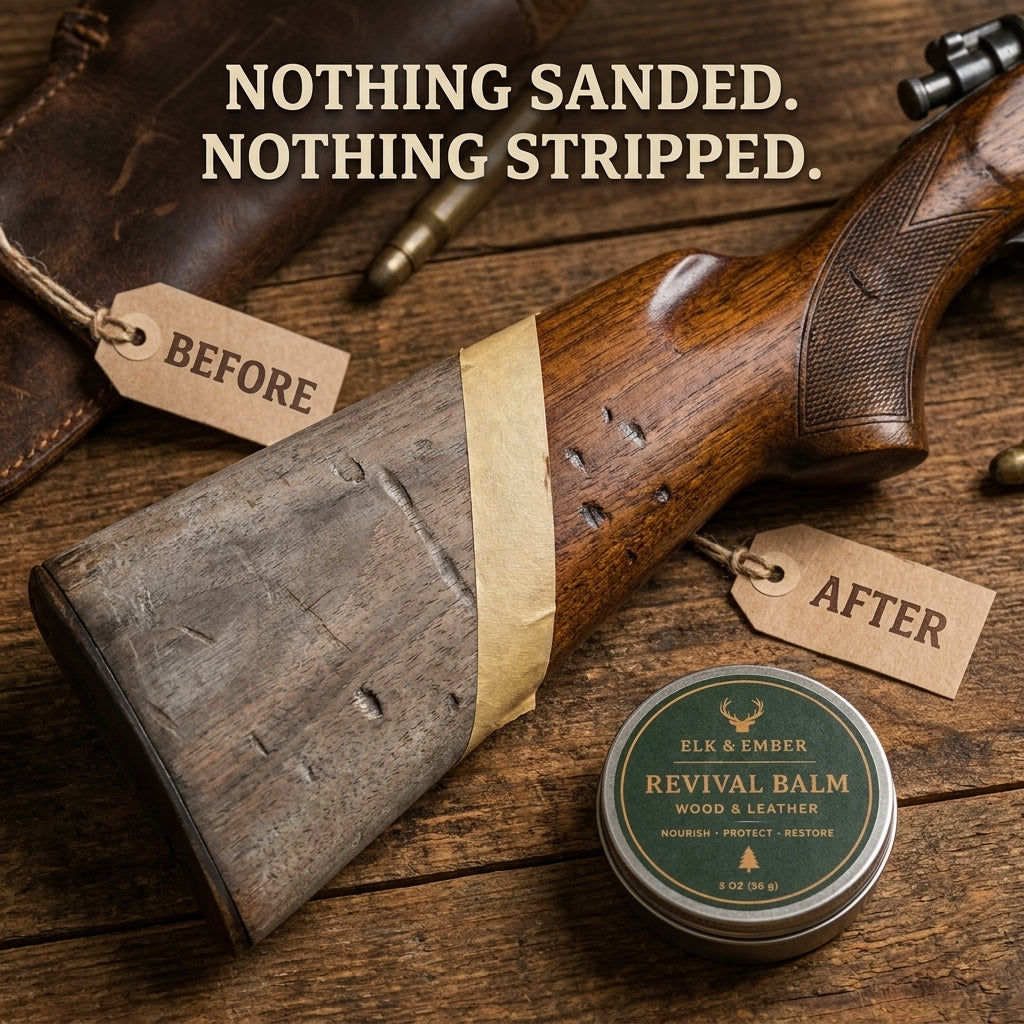
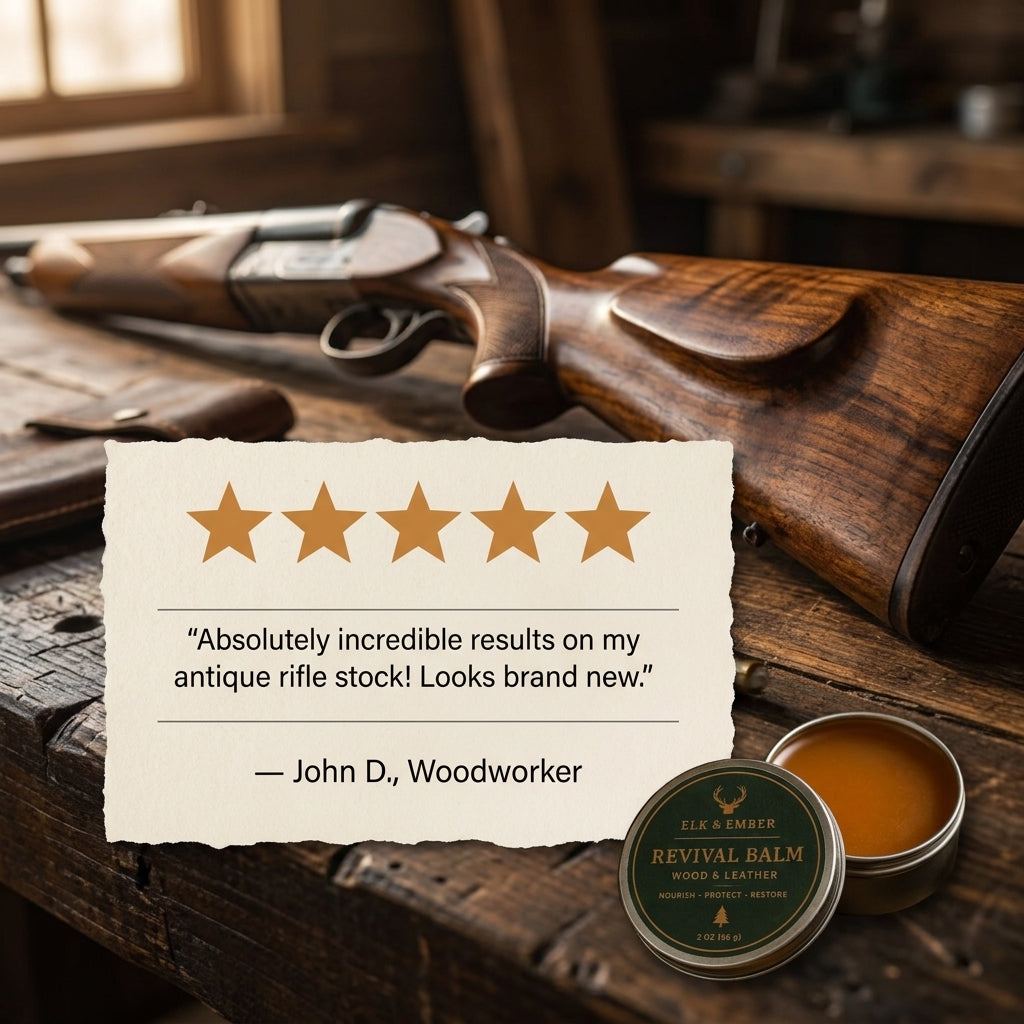
My dad's deer rifle, the day I finally took it out of the safe. Stock had gone grey and chalky, felt like driftwood. One coat and the walnut came back like it never left.
 Before
 After
Grandfather's service holster. Leather was stiff as cardboard and cracking at the fold. Worked it in with my thumb. Supple again in ten minutes. No darkening.
 Before
 After
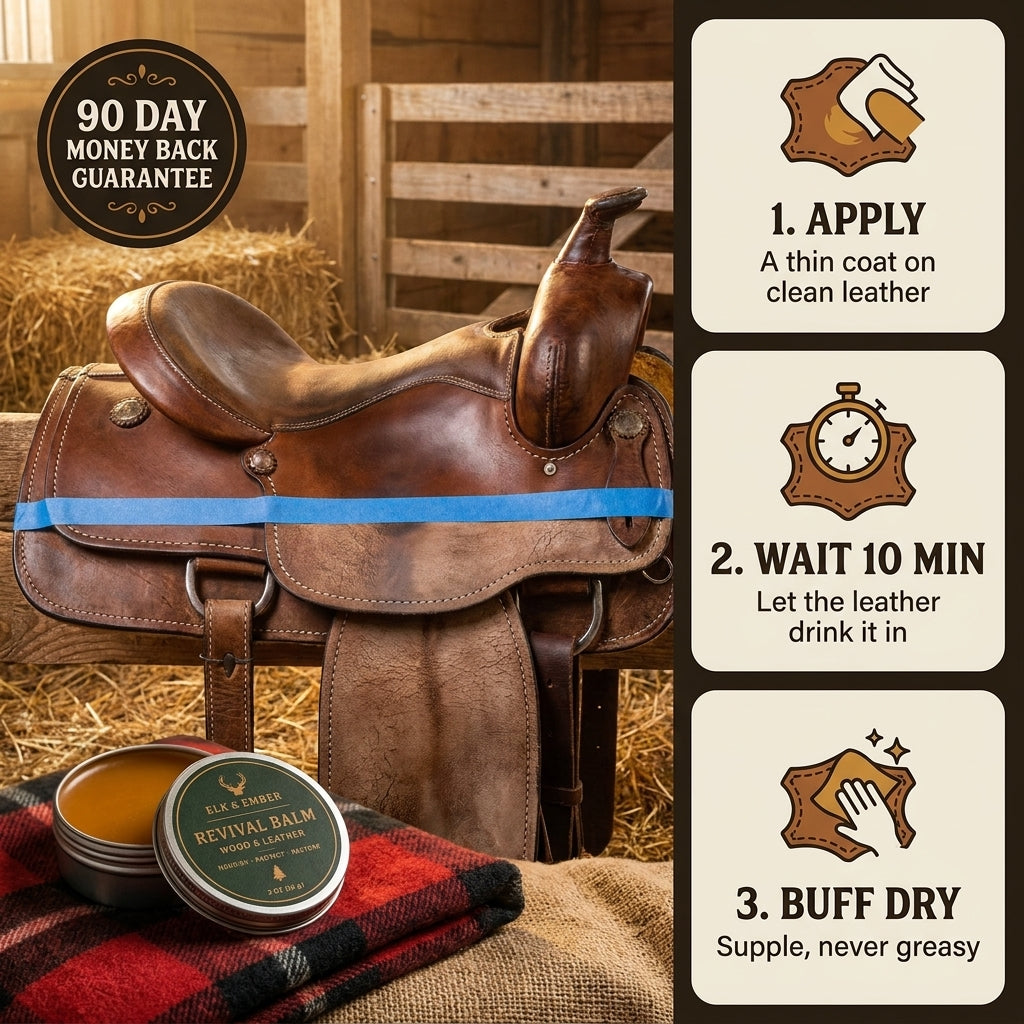
Western saddle sat in the barn six years. Skirt grey, fenders cracking. Two thin coats and it looks like the day I bought it. Even the tooling came back.
 Before
 After
My work boots were about done. White at the creases, toe box ready to split. Brought the color back without making them shiny. Still look like work boots. Just alive again.

Bring Grandpa's Rifle Back Without Refinishing It
Grey, dried-out stock. A sticky wrist from the foam case. A sling stiff as a board. Sound familiar?
Everyone at camp has the same two answers: strip it and oil it, or leave it alone and lose it to the safe. There's a third one, and it's what gunsmiths and cabinetmakers did before hard finishes existed. Clean the wood. Feed it. Seal it thin.
The Revival Balm is that third answer, and it is not a refinish. Nothing gets stripped, sanded, stained, or coated. The original finish stays, and the dents and handling wear stay exactly where they've always been.
Wipe it on, wait ten minutes, buff it off. Not eight coats over a winter. Back in the safe, or back in the field, before opening day.
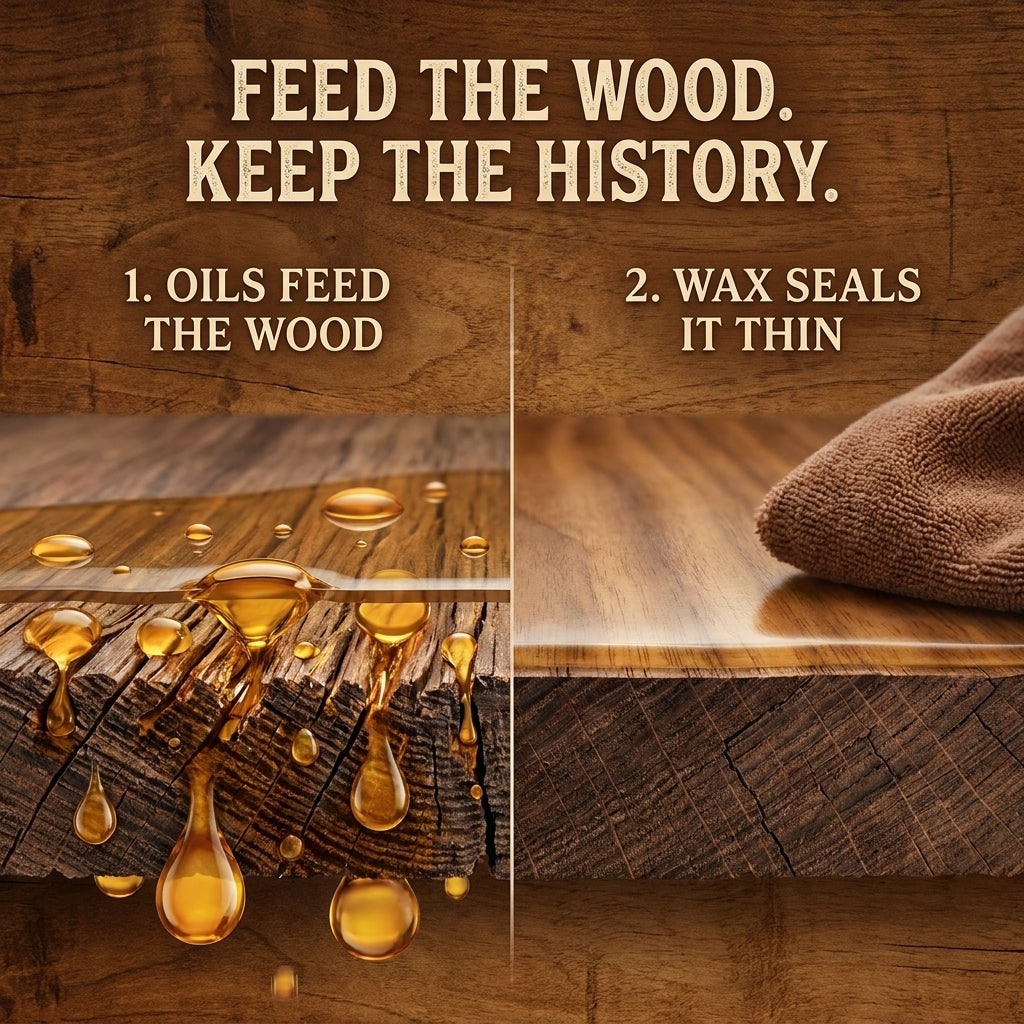
Feed the wood. Keep the history.
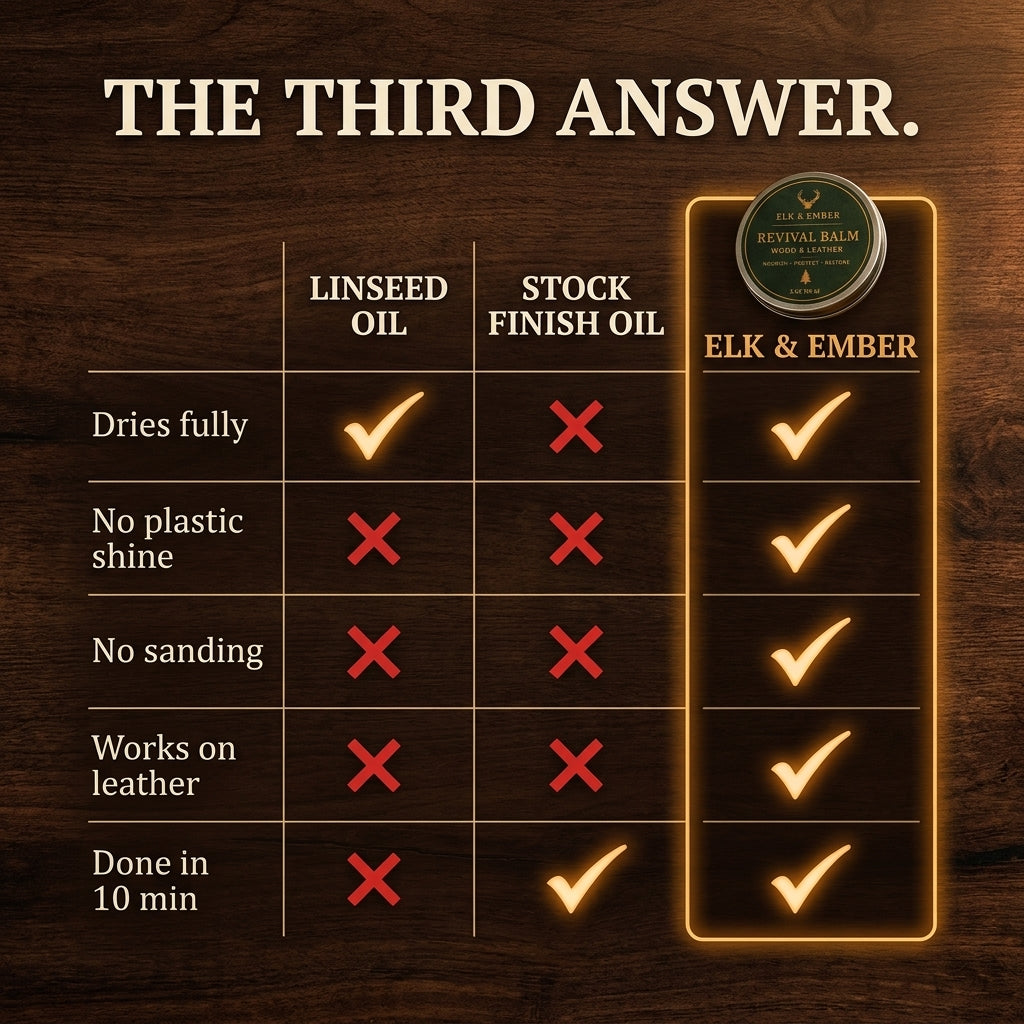
A grey stock isn't missing its finish. It's missing the oil that evaporated out from under it. Linseed feeds it but never dries. Hard oils dry but sit on top like plastic. Neither one does both.
Elk & Ember's Revival Balm does.
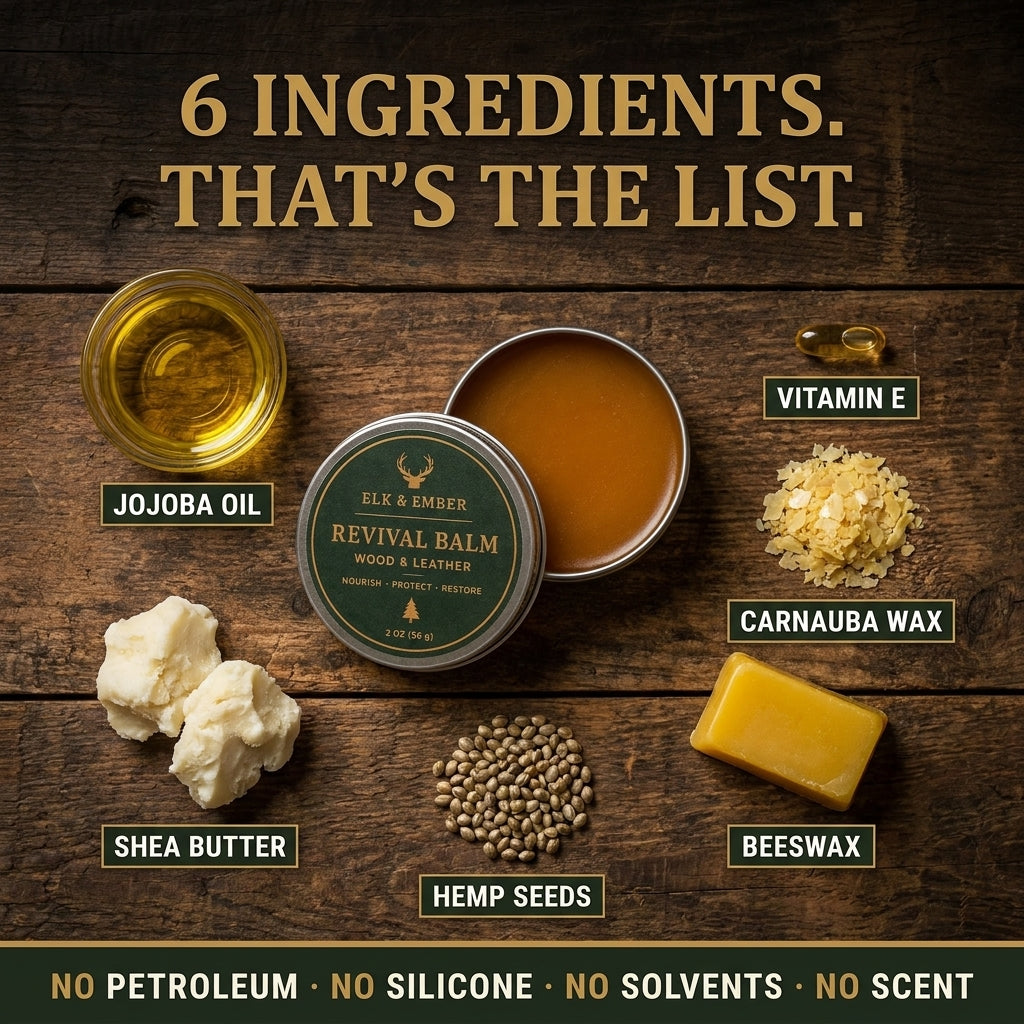
First, cold-pressed jojoba, shea, and hemp seed oil go through the existing finish into the wood and put back what dried out. That's why the color returns instead of getting painted on.
Then, beeswax and carnauba set a thin layer on top that buffs dry and helps shed rain and hand oils.


✗ Feels right on the hand. Never fully dries. Stays gummy on a humid day.

✗ Dries hard. Goes glossy. Looks like plastic on an old gun, and you can't wipe it back off.

✓ Wipes on, buffs dry in ten minutes. No sandpaper, no stain. Repeat it every season.
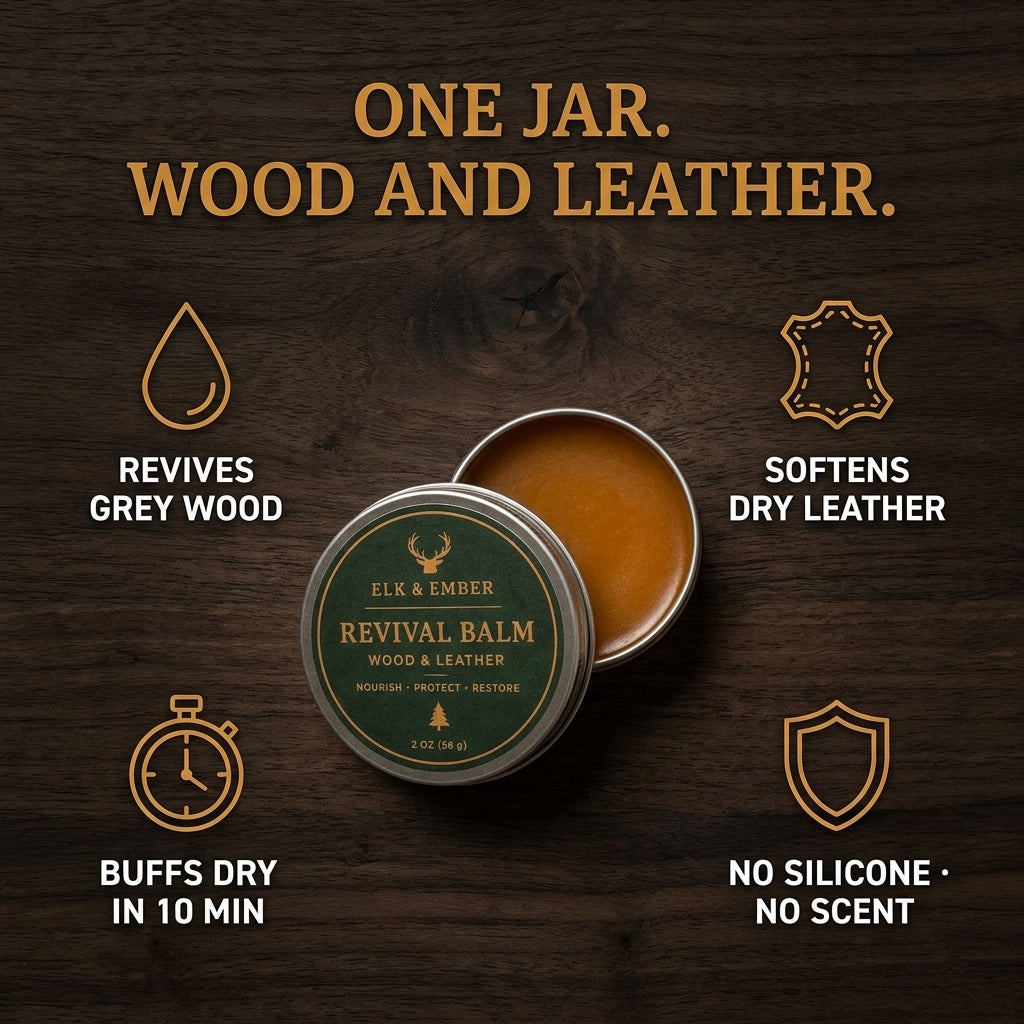
One jar. The wood, the leather, and the years in between.
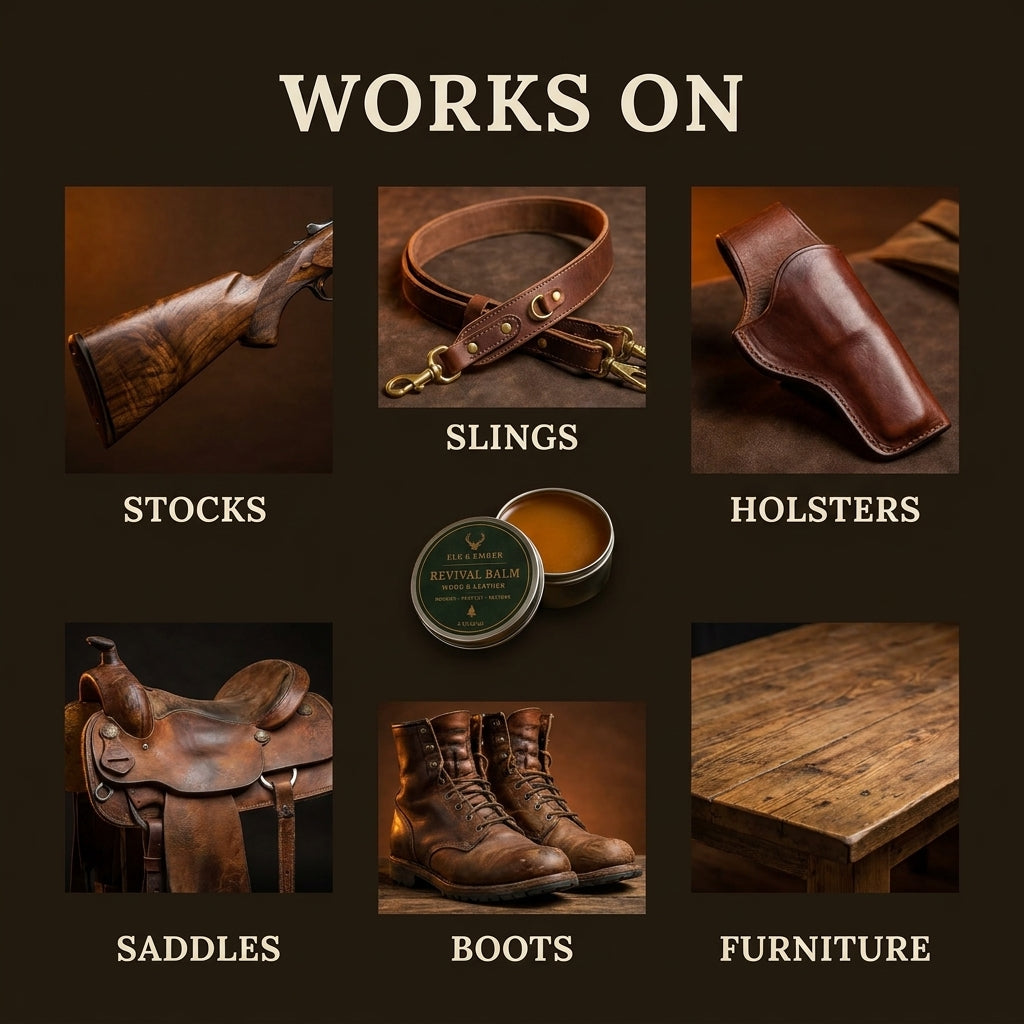
 Furniture
 Saddles & Tack
 Holsters
 Boots
 Stocks and Forends
 Slings
 Gun Cases
- Dry, grey, faded stocks and forends
- Handling wear and light scratches on the wrist and comb
- Sticky, grimy old finishes from cases and gun socks (wipe first)
- Stiff, dry, cracking slings, scabbards, and cases
- Hunting boots, cartridge belts, chaps
- Holsters and shooting slings: light coat only
- Cracks and gouges
- Checkering repair
- Rust, bluing, or any metal
- Dry-rotted or bonded leather
Walnut, birch, beech, maple, and laminate stocks, over oil, varnish, lacquer, and shellac finishes. If it needs a gunsmith, it needs a gunsmith. This is for everything else.
What's in the jar, and what isn't
- No petroleum distillatesSo it won't rot the linen stitching on an old sling.
- No siliconeSo a gunsmith can still work on the stock later.
- No turpentine, no solvents, no scentSo nothing carries downwind.
It goes on clear and deepens the color the way a wet rag does, then settles back as it buffs. On a light stock, test the inside of the forend first.

Stock, then sling

A rag with mineral spirits takes off the grime, old oil, and case-foam residue.

Over checkering, use almost nothing, or tape it off.

Let it go into the wood. Get the sling out while you wait.

A clean cloth, with the grain, until nothing comes off on your hand.

The sling
Warm it in the sun for a few minutes so it drinks. Rub in a thin coat, wipe off what's left, let it sit overnight. Off the rifle. A damp sling stored on the gun is how barrels and buttplates rust.
The only thing you can't undo is a refinish
Oil that stayed tacky. A finish that went glossy. A $30 bottle with a sixteen-page manual. A gunsmith quote higher than the rifle is worth. You've heard all of it at camp.
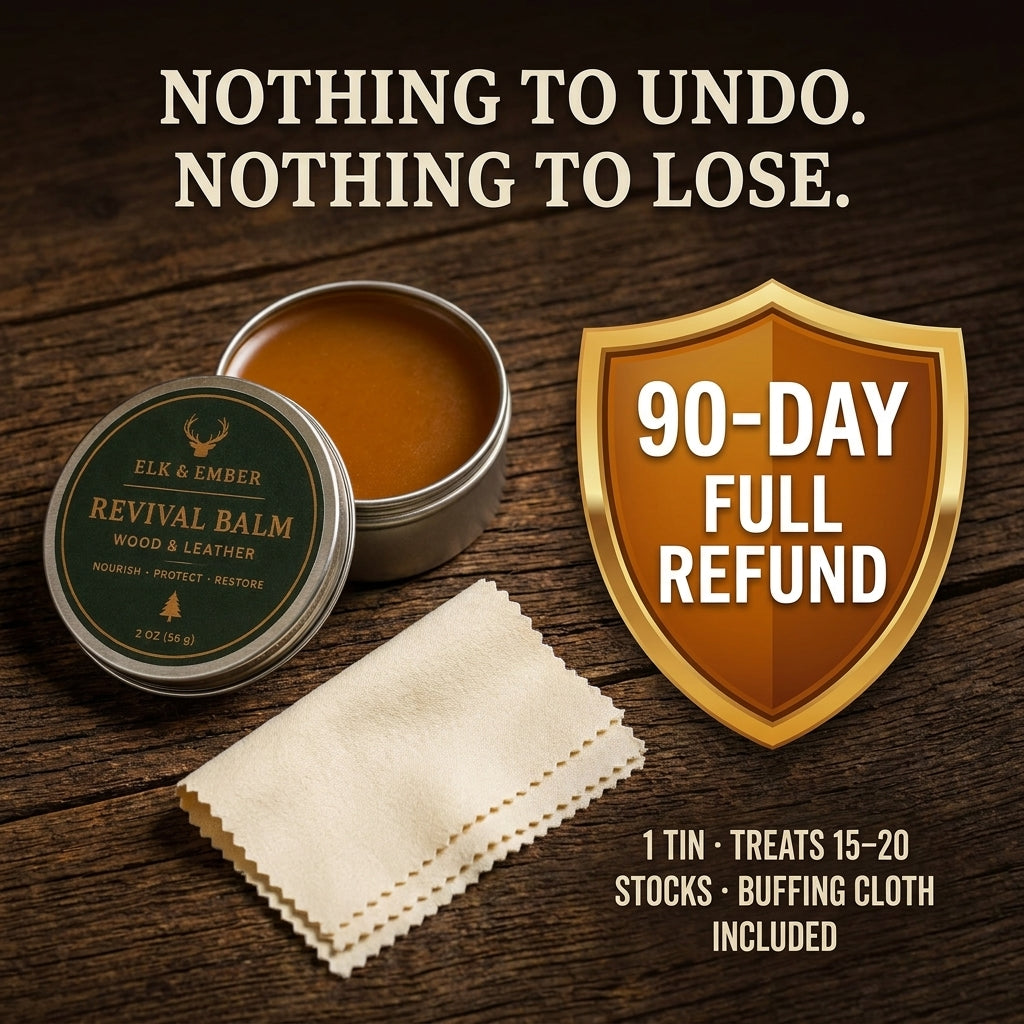
This doesn't strip, sand, or stain, so there's nothing to undo. And if the stock and the sling don't come back, you get the money back within 90 days. Full refund. No asterisk.
90 days. Full refund.
Send a photo of the stock or sling. We refund the jar. That's the whole policy.
Questions from camp
-
It deepens the color the way water does — because it's putting oils back where oils used to be. As the carrier absorbs and the wax buffs, the color settles to roughly where the wood or leather was when it was new. Light maple looks warmer for the first hour, then evens out. If you're cautious, test the inside of the forend or the back of the sling first.
-
No. If it feels tacky after ten minutes, you put on too much — buff harder with a clean cloth and it comes right off. Once buffed, the surface is dry to the touch and won't attract dust any more than the bare wood did.
-
Not if you apply sparingly. Use a very thin coat over checkering — a little goes a long way. If you're nervous, mask the checkering with painter's tape and apply around it. The points stay sharp.
-
Yes. The oils penetrate through most finishes — that's the whole point. Over a very thick polyurethane coat where water beads on contact, it won't absorb as well. For those, a light scuff with 0000 steel wool first opens the surface enough for the oils to get in.
-
Wipe the grime off first — a rag with mineral spirits does it. The balm isn't a cleaner. Once the stock is clean and dry, one coat brings the color and the feel back.
-
On laminate, yes — it's real wood bonded in layers, and the surface responds the same way. On synthetic (polymer, fiberglass), there's no wood grain to feed, so the balm doesn't do much. A damp cloth is all a synthetic stock needs.
-
This product is for wood and leather only. It won't harm bluing if some gets on it — just wipe it off — but it's not formulated for metal. For rust and bluing touch-ups, you need a different product.
-
No. If the wood is cracked, split, or gouged, that's structural — you need a gunsmith or a wood filler. The balm feeds and protects the surface, but it can't rebuild missing material.
-
The opposite. A neglected stock with dried-out, grey wood lowers the value. Feeding the wood with a non-permanent conditioner is standard practice among collectors. Because the balm feeds through the finish instead of altering it, the original finish stays original.
-
Boiled linseed feeds but never fully dries — stays tacky in humidity. Hard oils harden into a plastic-like film — great for a new build, wrong for preserving an original finish. The Revival Balm absorbs like a conditioner and seals like a wax. The beeswax sheds light rain and hand sweat without the gloss or the commitment.
-
Because linseed doesn't dry, doesn't seal, and doesn't buff. You'll apply it, wait, apply again, and six months later the stock still feels gummy on a humid day. One coat of this does what six coats of linseed tries to. And a tin lasts 15–20 stocks.
-
No petroleum distillates, so the linen and nylon stitching stays intact. Use a thin coat on holsters and slings — you want them supple, not soft. The beeswax helps retain shape while restoring flexibility.
-
One coat before each season is plenty for a working gun. A safe queen might go a year or two between coats. One tin covers roughly 15–20 full stocks. Start with a dime-sized amount and add more only where the wood still looks dry after the first pass.